
Most shops look at the robot first. But when you’re trying to get more parts out the door, the layout around that robot is what sets the pace.
A robotic welding system that works well today can quickly become a constraint if it wasn’t built with growth in mind. On a busy floor, production time isn’t just lost at the torch. It’s lost in the small gaps between stations, in the time it takes to clear a part, or in the way operators have to work around the setup.
That’s why scalability matters. It is the ability to handle more parts, more variation, or more hours without reworking your entire process. And when you build it right from the start, you get more than speed. You get a system that keeps working long after the first production run.
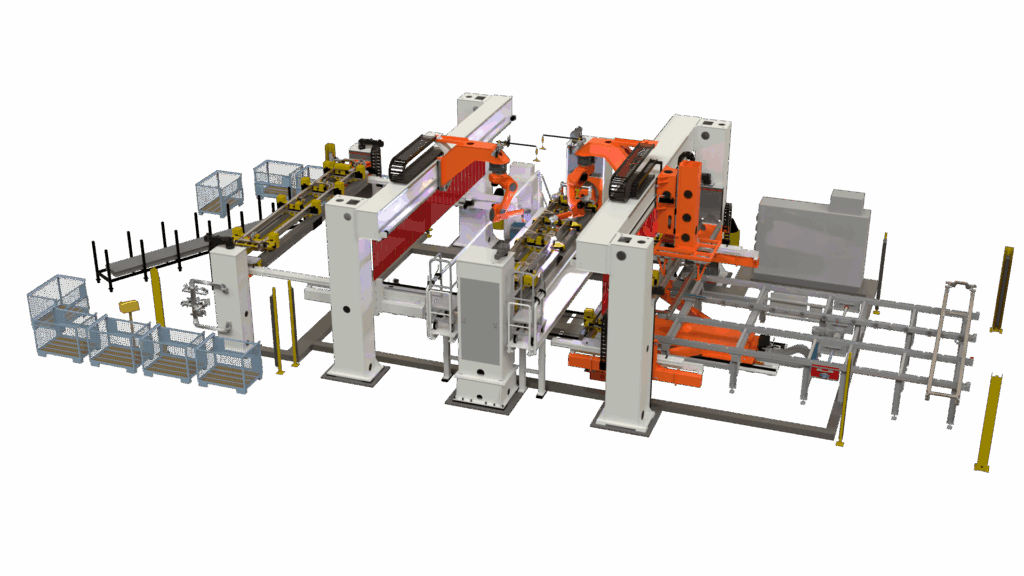
Layout Drives Throughput, Not Just Movement
A scalable weld cell keeps the process moving without forcing you to work around it. That starts with layout.
Does the robot have full access in one setup? Can you run a second station while the first one finishes? Will you be able to add another robot if volume picks up?
Track-mounted arms, dual-station tables, and smart part flow help with all of that. But they only pay off if the space allows for them. Trying to wedge flexibility into a cell that wasn’t designed for it often creates more downtime than value.
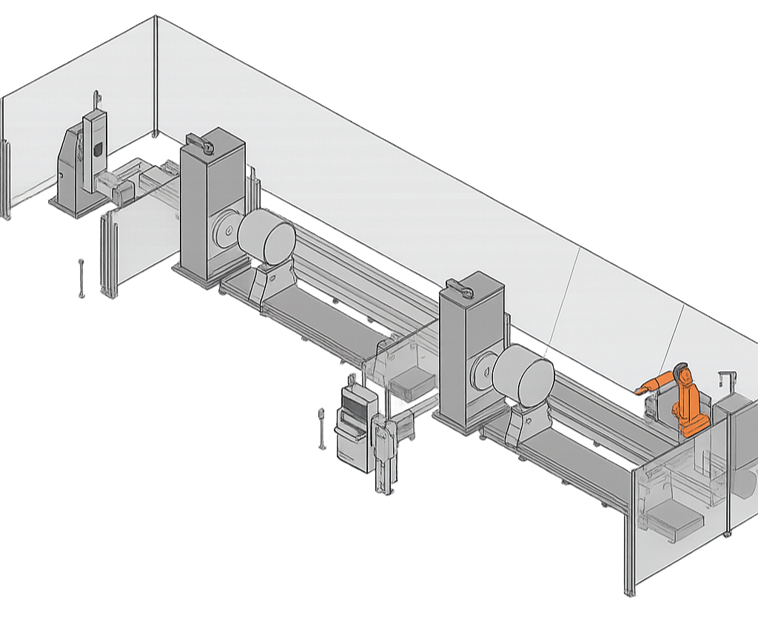
The Fastest Cycles Come from Fewer Stops
Cycle time is not just what happens during the weld. The real delays are usually between parts.
How quickly can your operator clear the station and get the next part in? Can they load while the robot is still working? Are they fighting with a fixture that was built for one job and now handles ten?
When the layout supports smooth handoffs, fewer interruptions, and good weld access, you cut time without pushing the robot faster. That keeps quality high while keeping productivity up.
Scalability Shouldn’t Mean Starting Over
A well-built cell grows with your operation. You should be able to take on a new part family, extend a shift, or add a new process like grinding or inspection without tearing everything out.
That kind of flexibility comes from planning. If your layout supports modular fixturing, track motion, or coordinated tools, you can add capability in stages. It also means your ROI builds over time, not just on day one.
There is no shortcut here. A system that scales is one that was built to.
Quality Gets Better When Flow Gets Smoother
The more you force operators to adjust or improvise, the more you risk inconsistency. When stations are cramped or parts need flipping, that’s where weld defects and variation creep in.
With the right spacing, access, and part positioning, the robot does what it’s supposed to do—repeat the same weld, with the same settings, over and over again.
Good layout isn’t just about hitting numbers. It’s about getting welds right without guesswork. And that’s how you protect both throughput and quality.

Final Thought
You don’t scale a robotic weld cell with a faster robot. You scale it by building a space that supports better flow, cleaner handoffs, and more room to grow.
If you’re going to automate, it’s worth doing right. That means designing a system that still works when your volume doubles, your part list grows, or your next hire needs to learn fast.
A smart layout pays off every day you run it.
FREQUENTLY ASKED QUESTIONS
What makes a weld cells scalable?
A scalable weld cell is designed to support future growth. It includes flexible layout, modular fixturing, and the ability to add processes or capacity without starting over.
How does weld cell layout reduce production time?
A smart layout minimizes part handling, shortens loading time, and allows welding and setup to happen in parallel. These gains reduce overall cycle time.
Can a robotic weld cell be expanded after installation?
Only if the original design allows for it. Track systems, open floor space, and modular tooling make it easier to scale without disrupting current production.
How do I know if my shop needs a scalable weld cell?
If your part mix is growing, production volumes are increasing, or you’re planning to automate more steps in the future, scalability should be part of the initial design.