
Most automation decisions don’t fall apart because of bad equipment.
They fall apart because the wrong problem was being solved.
It happens more than most teams expect. The system works. The welds are acceptable. But the result doesn’t move the business forward the way it should.
That’s usually not a technology issue. It’s a thinking issue.
Before you compare systems, layouts, or pricing, you have to step back and ask a more important question.
What are we actually trying to fix?
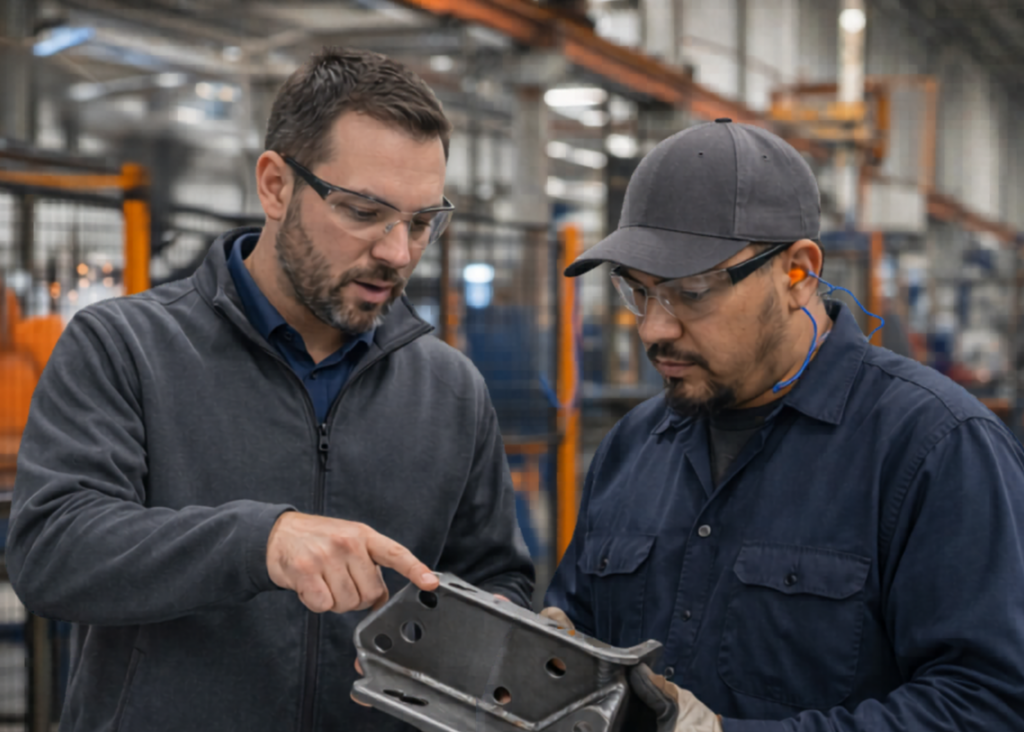
It Starts With the Problem, Not the Equipment
One of the most common mistakes is starting with a solution.
“We need a robot.”
It sounds reasonable. But it skips the step that matters most.
Strong buyers take a different approach. They define the problem clearly before anyone starts talking about equipment.
- Is the issue throughput
- Is it weld quality
- Is it labor availability
- Is it consistency across shifts
Those answers shape everything that follows.
As one operations manager explained when evaluating automation:
“We pitch the part first, not the solution. We don’t tip our hand to what we think we need. We lead with the challenge and let the solution take shape from there.”
That mindset changes the outcome. Instead of forcing a system to fit, the system is built around the reality of the operation.
What You Compare Matters More Than What You Buy
At some point, every project turns into a comparison.
Quotes come in. Layouts are reviewed. Specs start to look similar.
This is where a lot of decisions lose their footing.
Because it is easy to compare what is visible. Reach. Payload. Cycle time.
What is harder to evaluate is how the system will actually perform once it is part of your operation.
- How parts move through the cell
- How fixturing handles variation
- How the system responds when something changes
- How support works when production is on the line
These are not always clear in a proposal. But they are what determine whether the system holds up under real conditions.
The Real Investment Shows Up After Install
A robotic welding system does not prove its value the day it is installed. It proves it over months and years of production.
That is where the gap shows up between a system that works and a system that delivers.
The questions that matter are not just about capability. They are about sustainability.
- How quickly can your team get comfortable running it
- How often will you need help
- How easily can you bring new parts into the process
- What happens when something stops working
Research and customer feedback point to the same conclusion. Support, reliability, and ease of use carry more weight over time than initial cost.
Because the real cost is not the system itself. It is lost production when the system cannot keep up.
Good Decisions Come From Staying Close to the Process
The strongest automation projects are not handed off and revisited at install. They are built through involvement.
That means staying engaged while the system is being defined and developed.
- Reviewing real parts instead of relying only on drawings
- Looking at layout options before they are locked in
- Working through changes early instead of reacting later
- Bringing operators into the conversation before the system goes live
This is not about micromanaging the process. It is about making sure the system reflects how the work actually gets done.
The more distance there is between planning and reality, the more adjustment is required later.
Where The Checklist Fits In
A readiness checklist still has its place.
It helps organize information. It helps define where you are starting from.
But it does not make the decision for you.
If anything, it should help you ask better questions. It should support conversations, not replace them.
Because no checklist can account for how a system will perform once it is part of your operation.
What This Really Comes Down To
Automation is not just an equipment decision. It is a decision about how your operation will run moving forward.
The manufacturers who get the most from it are not focused on buying a robot. They are focused on solving the right problem and building a system that holds up over time.
If you are going to invest in automation, it is worth doing right.
And that starts with how you think about the decision.
FREQUENTLY ASKED QUESTIONS
What is the biggest mistake companies make when buying welding automation?
Starting with the equipment instead of the problem. When the focus is on the robot instead of the outcome, the system often ends up solving the wrong issue or creating new ones.
How should I approach an automation decision if I am just getting started?
Start by defining what you are trying to improve. Whether it is throughput, quality, or labor challenges, clarity at the beginning leads to better system design and better long-term results.
What should I be comparing when evaluating automation systems?
Look beyond specifications. Focus on how the system will function in your environment, how it handles variation, and how it will be supported once it is in production.
Why does support matter so much in automation?
Because downtime is expensive. A system that cannot be maintained or supported quickly will cost more over time than one backed by strong service and expertise.