
Not every part belongs in a robotic weld cell. Whether yours does comes down to a few things a welder sizes up fast: can the torch reach the joints, do the parts come in consistent enough to hold the same way every time, is there enough volume to earn back the setup, can you fixture it repeatably, and how the metal behaves under heat. Clear those and automation is worth a serious look. Miss them and a robot will just make your existing problems faster and more repeatable.
That last part is the one people forget. A robot does exactly what you tell it, every time, without getting tired and without compensating the way a skilled welder does on the fly. That is its strength and its limitation. So before anyone talks about which robot you need, it is worth sizing up the part the way a welder would. Here is what we look at.
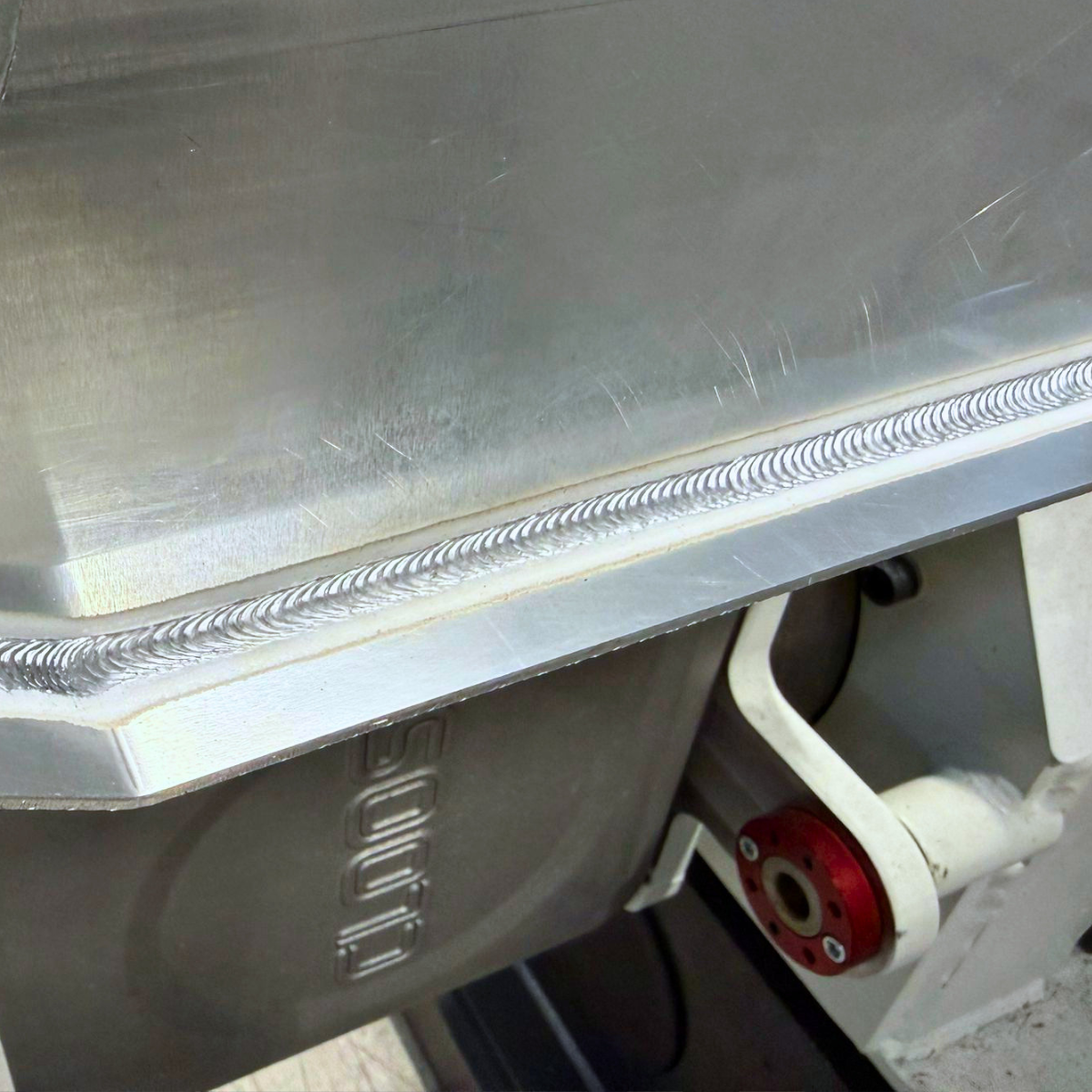
Start with the joint, not the robot
The first question is purely physical. Can the torch reach every weld at the angle the weld needs, without the part or the fixture getting in the way? A joint that is easy for a person holding a torch at an awkward angle can be genuinely hard for a robot that has to approach it within the reach and rotation of the arm.
Most access problems are solvable, with a positioner that turns the part, or a small change to how the weldment is designed. But it is better to know that up front than to find out after the cell is built. If a person has to fight to reach a joint today, automating it starts from a harder place.
Consistency is the whole game
This is the one that separates good candidates from bad ones. A robot welds the part it is given. If your parts come in with fit-up that wanders from one to the next, gaps that open and close, tack welds in slightly different spots, the robot will faithfully weld that variation right along with the part. It does not see the gap and slow down. It does not notice the part sitting a quarter inch off and adjust. A person does all of that without thinking. A robot does not.
So the real question is not “is this part weldable.” It is “does this part show up the same way every time.” The more consistent your incoming parts and fit-up, the better the candidate. If they are all over the place, that is not a reason to walk away, but it does mean the work to fix it happens before the robot, not after.
The volume has to earn the setup
Automation carries a setup cost: programming, fixturing, the time to dial it in. That cost gets spread across every part you run, so the more parts, the more sense it makes. The good news is the threshold is lower than most first-time buyers assume. You do not need to be a high-volume production shop. Most manufacturers exploring automation for the first time are not. Nearly 60 percent of manufacturers tell us they would rather start small and expand than buy a big complex line up front, and that instinct is right.
What matters more than raw volume is whether the part repeats. A moderate quantity of the same part, run regularly, is often a better candidate than a huge one-off job. Steady and repeatable beats large and sporadic. If you want to gauge which of your jobs make the best first candidates, the parts that tend to get automated first are a useful place to start.
Can you hold it the same way every time
Almost every good automation candidate needs a fixture, something that locates the part in the same position for every cycle. If a part can be held repeatably and accessibly, you are in good shape. If it is an odd shape that is hard to clamp without blocking the welds, that is a design problem worth solving early, because the fixture is doing half the work of getting a consistent weld.
This is also where a small change to the part itself can pay off. A locating feature, a tab, a slightly different joint design, sometimes a minor tweak turns a difficult part into an easy one. It is worth having that conversation before the part is locked in. Tooling does more than hold the part in place. The way it is designed shapes workflow, quality, and ROI as much as the robot does.
How the part behaves under heat
Finally, the weld itself. Some materials and joint configurations are forgiving. Others move. Thin sections distort, certain materials pull as they cool, and a robot running a fast, consistent bead can actually expose those tendencies more than hand welding did, because it is laying heat down the same way every pass. None of this disqualifies a part. It just means the weld sequence, the heat input, and the fixturing have to account for it. The point is to predict that behavior before the cell is built, not discover it after.
A faster way to find out
Those five things, joint access, consistency, volume, fixturing, and how the part behaves under heat, are most of what an experienced welder weighs in the first few minutes of looking at a part. We turned that thinking into a 21-point readiness checklist you can run your own shop through in a few minutes. It scores where you stand across the part, the fixturing, your floor, your team, and your support situation, and it tells you what to shore up before you spend a dollar. You can take it here: Readiness Checklist.
And if you would rather not guess, bring us the part. Not a drawing, the actual part. We will weld it in our Experience Center and tell you straight whether automation makes sense for it. Sometimes the answer is “not yet,” and we will tell you that too.
FREQUENTLY ASKED QUESTIONS
Can low-volume or high-mix parts be automated?
Yes, more than they used to be. Flexible fixturing and cobot cells have lowered the volume threshold a lot. The economics are different than for a high-volume single part, but “we run a lot of different things in smaller batches” is no longer an automatic no.
Does my part need a fixture?
Almost always. The fixture locates the part the same way every cycle, which is what makes the weld repeatable. A good fixture is doing as much for weld quality as the robot is.
What makes a part a bad candidate?
The usual disqualifiers are joints the torch cannot reach, fit-up that varies too much from part to part, or volume too low to earn back the setup. Most of these are fixable. Few are permanent.
Do I need to redesign my part for automation?
Sometimes a small change helps, a locating feature or a cleaner joint design. It is rarely a full redesign. It is worth reviewing before the part is finalized.
Worth doing right starts before the first arc, with an honest look at the part.